1. Overview
Voit is a premium Figma design system built for teams who think in systems. Ali Tohme, founder of Voit, had laid the foundation; core styles, tokens, miscellaneous assets, components, and patterns were in place. I was brought in to build the top of the stack: Blocks - full page and screen compositions that turn a component library into something designers can actually ship from. Every block in Voit is my work.
The result shipped in December 2025. Voit is now used by 500+ designers at companies including Adobe, Webflow, Zoom, Typeform, and Classpass.
10,000+ components. One system. Built to scale.
2. The System
One design system. Two modes. Infinite configurations.
Voit is structured across five layers: Foundation (tokens, typography, spacing, color), Miscellaneous (6,000+ assets, icons, brand logos), Components (10,000+ variants), Patterns (250+ reusable layout sections), and Blocks (150+ full-page compositions). My work lives at the top of that stack - the layer where everything underneath either holds together or falls apart.
Blocks combine patterns into complete, responsive page layouts ready to ship. A designer drops in a Hero block, a Features block, a Pricing block, a Testimonial block - and has a product page. The system does the heavy lifting. My job was to make sure every block was composed well enough that the output felt intentional, not assembled.
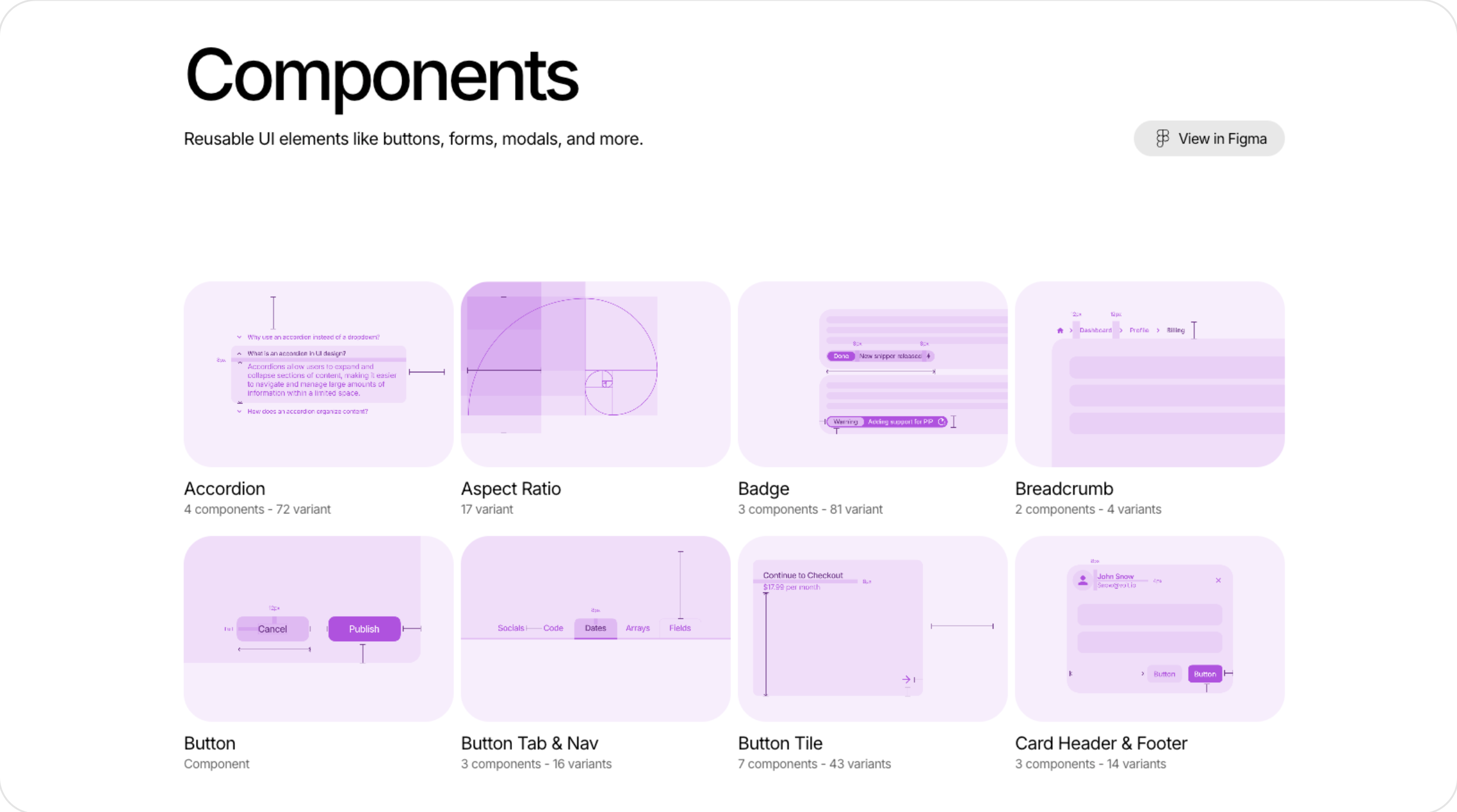
Every block built from what already existed. Consistency enforced from the bottom up.
3. Three Decisions That Shaped the System
Constraint as a design discipline. Every block had to be built from existing patterns and components; no exceptions, no workarounds. That constraint, which could have been limiting, enforced exactly the kind of consistency a design system needs to function at scale. The discipline of composing upward from what already exists rather than redesigning from preference is what makes the output trustworthy for 500+ designers building products we'd never seen.
Blocks as the real proof of system. Foundations and components are invisible to most designers, they work underneath. Blocks are where designers actually spend their time, dropping in a Hero or a Pricing section and trusting it to work. Designing 150+ blocks meant thinking about how each composition would be used, stretched, and repurposed by someone building a product under deadline. Every block had to be opinionated enough to be useful and flexible enough to be adapted without breaking.
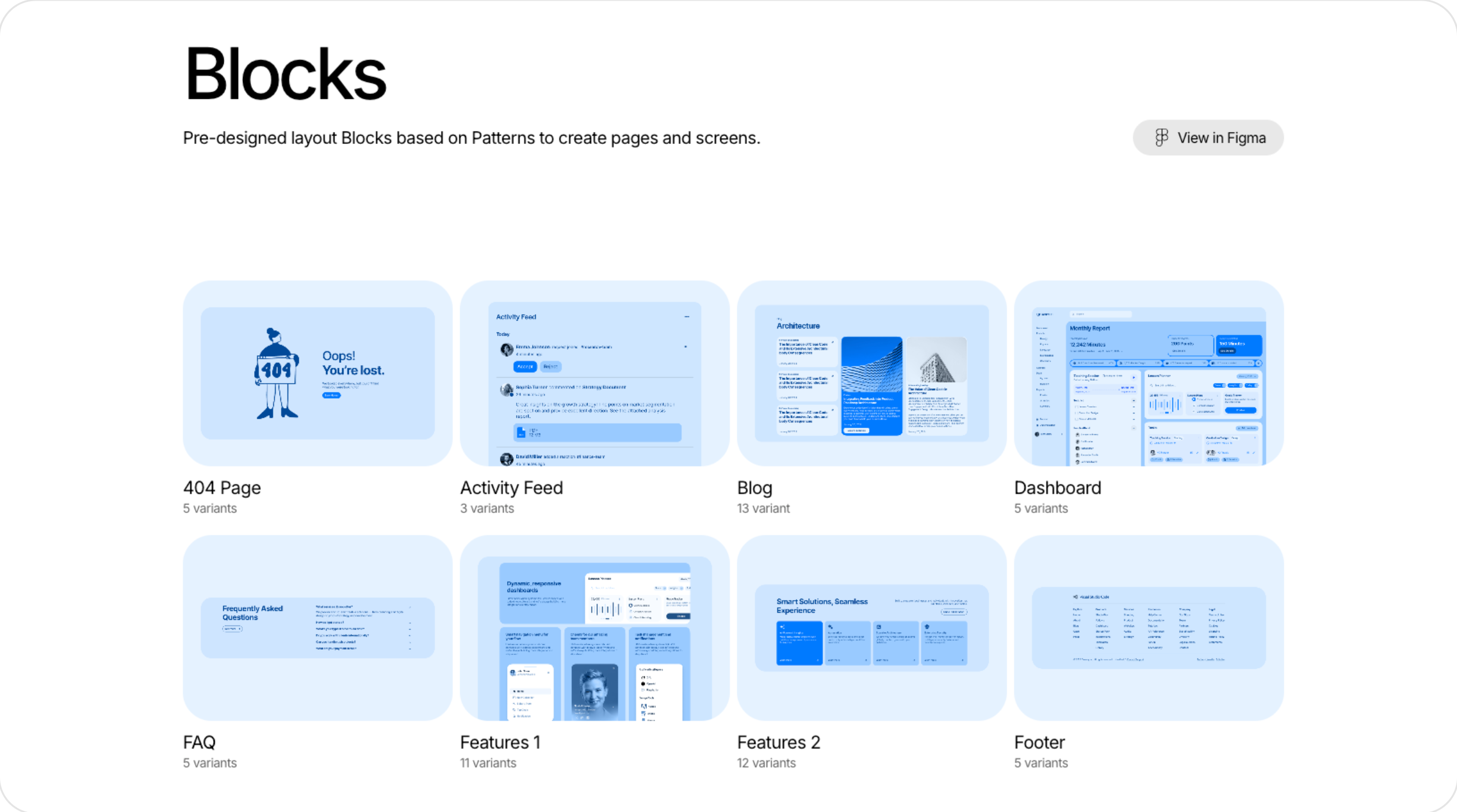
Every block built from what already existed. Consistency enforced from the bottom up.
Dashboard as the hardest block to get right. Dashboards are where design systems either hold up or fall apart. Dense information hierarchy, multiple data states, complex component combinations, if the system works here, it works everywhere. The dashboard block category was the most technically demanding work in the project. Every gap in the underlying component library became visible immediately when composing at this level of complexity.
4. What I Built
4.1. All 150+ Blocks Full page and screen compositions covering 13 categories: 404 Page, Activity Feed, Blog, Dashboard, FAQ, Features, Footer, Hero, Pricing, Sections, and Testimonial. Each block is built from Voit patterns and components, tokenized for light and dark mode, and responsive by default.
4.2. Dashboard Blocks The most complex block category. Data tables, analytics panels, activity feeds, user profiles, and reporting layouts, all composed from Voit's component library and stress-tested against the system's token architecture.
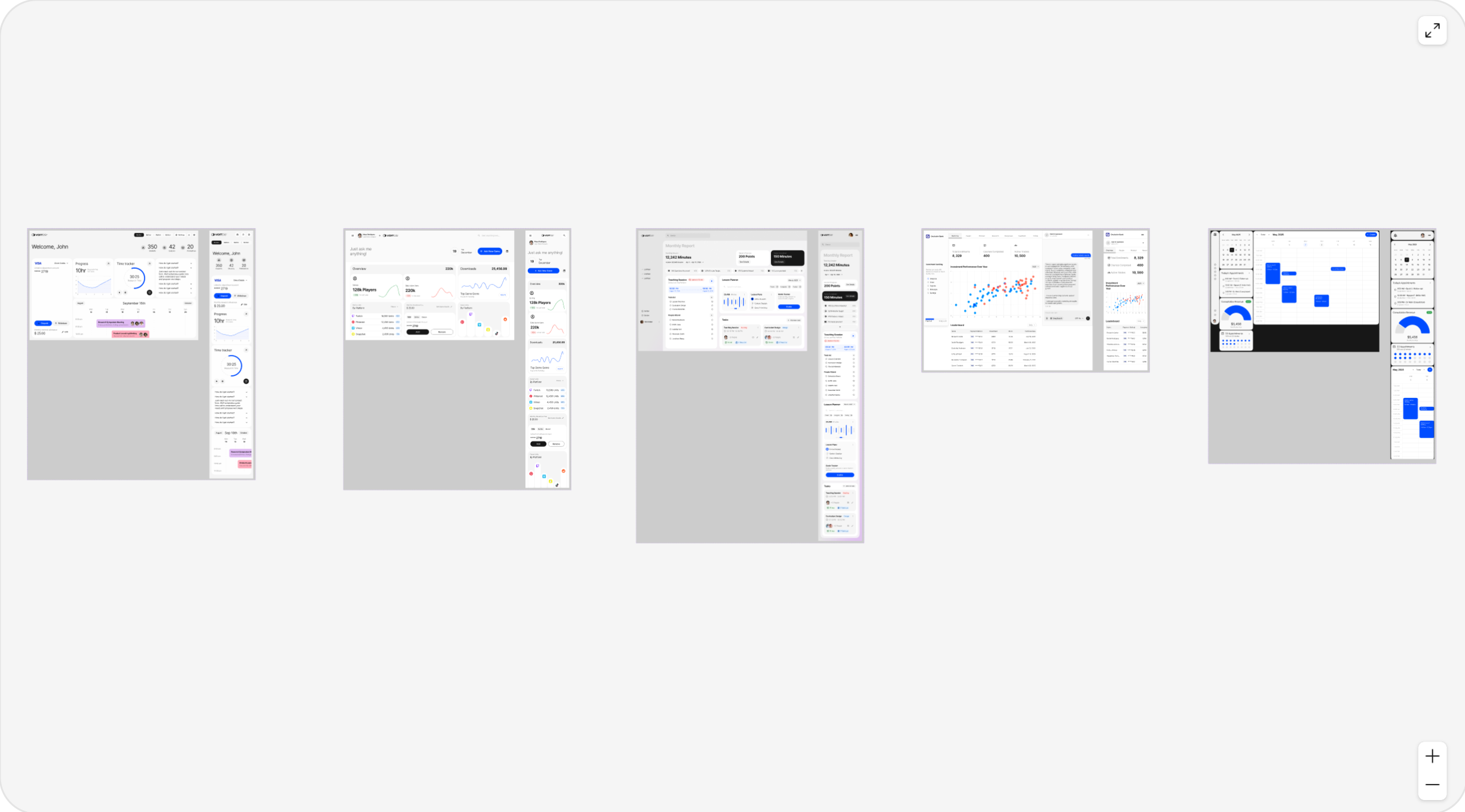
If the system holds here, it holds anywhere.
4.3. Marketing contributions Website section mockups and social assets for the voit.io marketing site and X account, contributing to how the product presents itself publicly.
5. Outcomes
Shipped December 2025. 500+ designers using Voit. Trusted by designers at Adobe, Webflow, Zoom, Typeform, and Classpass. 150+ blocks delivered. 13 block categories. Light and dark mode throughout. One token architecture. Every block in the system is my work.
Design systems work when nobody notices the seams. The goal was never to add to Voit, it was to complete it in a way that felt like it was always whole.
Figma file (foundations, components, and patterns): View on Figma. Blocks are not included in the public file.