Designing the handoff between an AI coding agent and a human
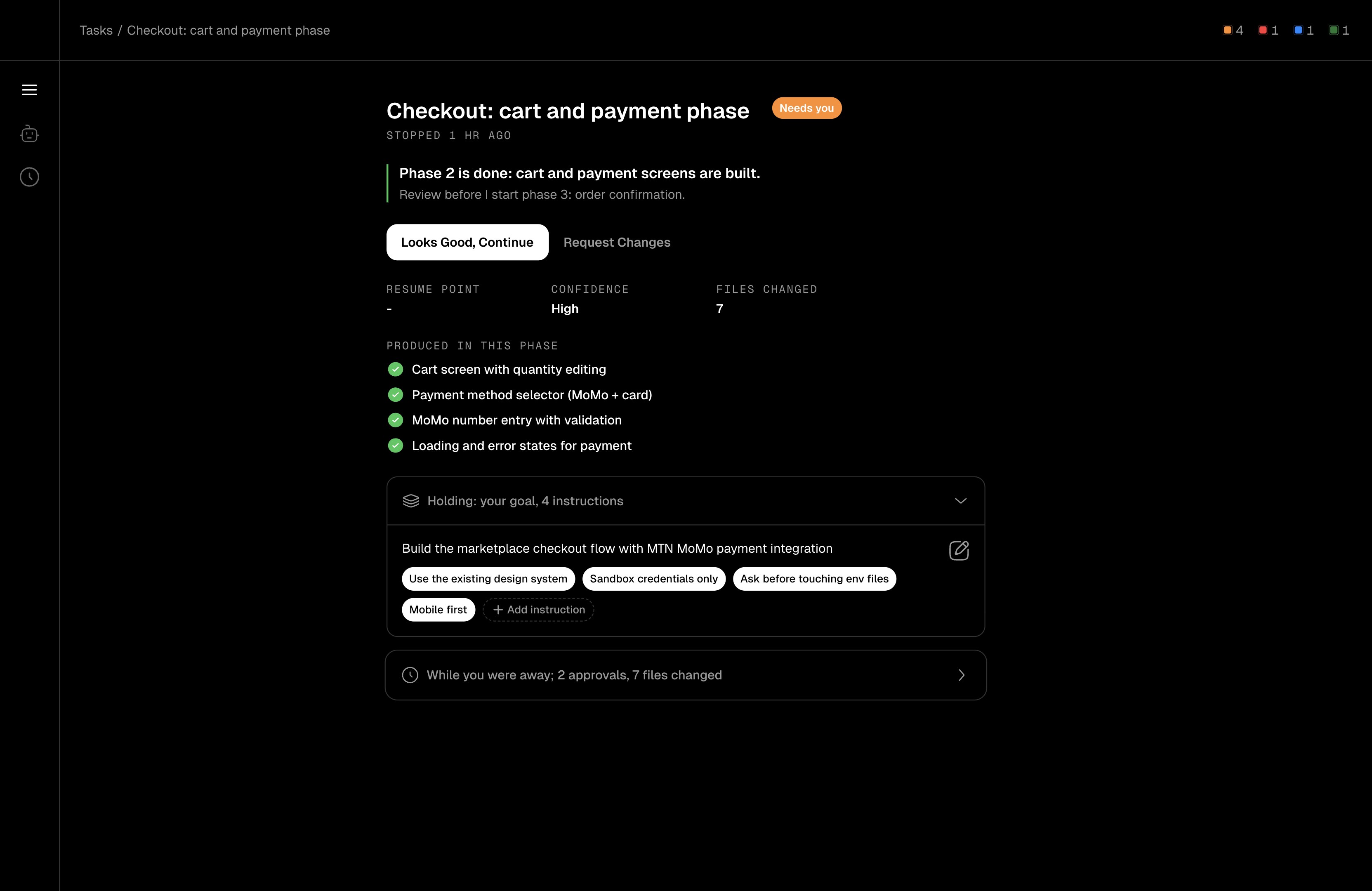
Handoff explores what happens between an AI coding agent finishing a task and a human deciding what happens next. The problem wasn't that agents couldn't produce code. It was that when work stopped, failed, or degraded, the human often had to reconstruct what had happened from a wall of messages.
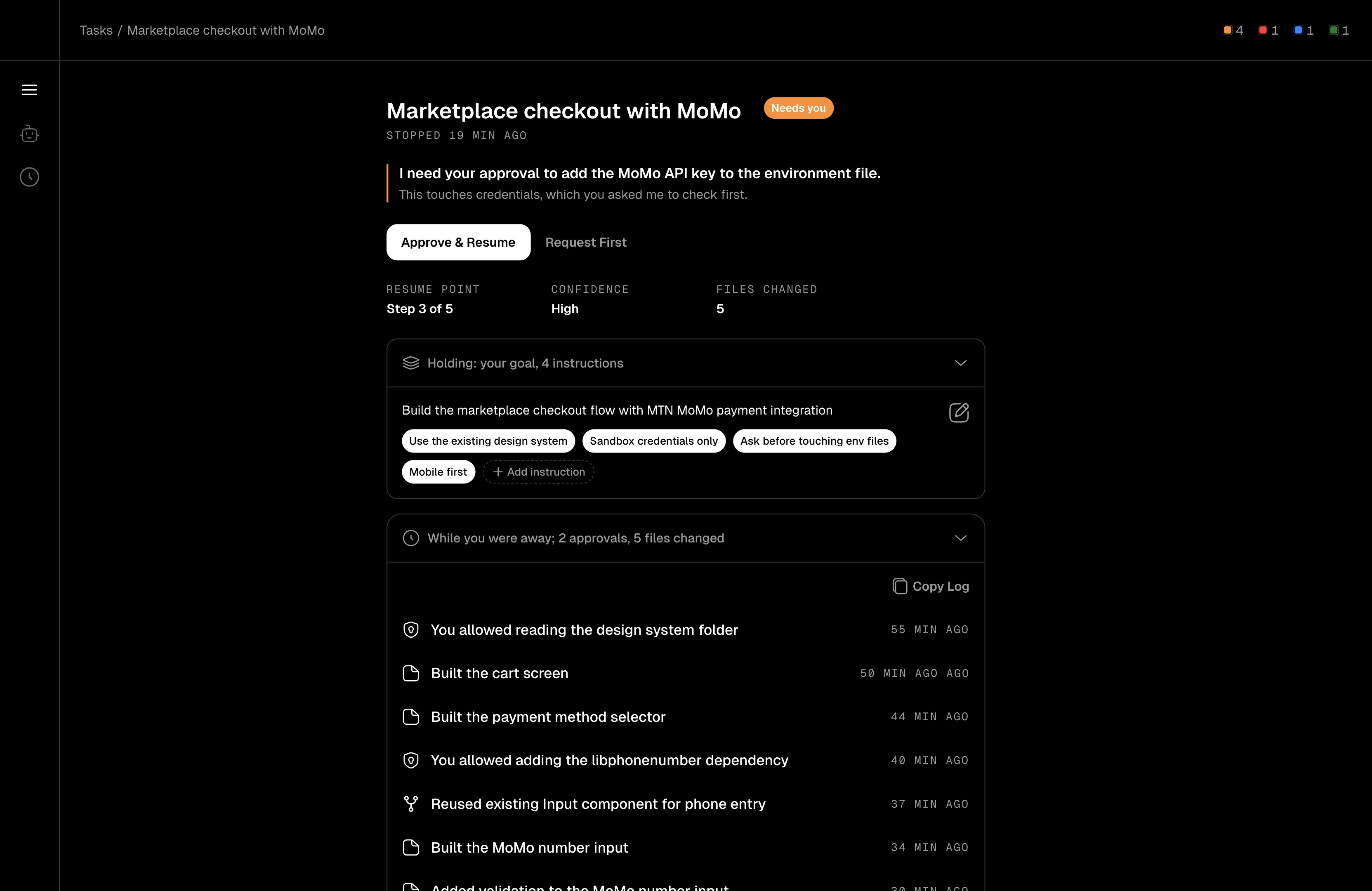
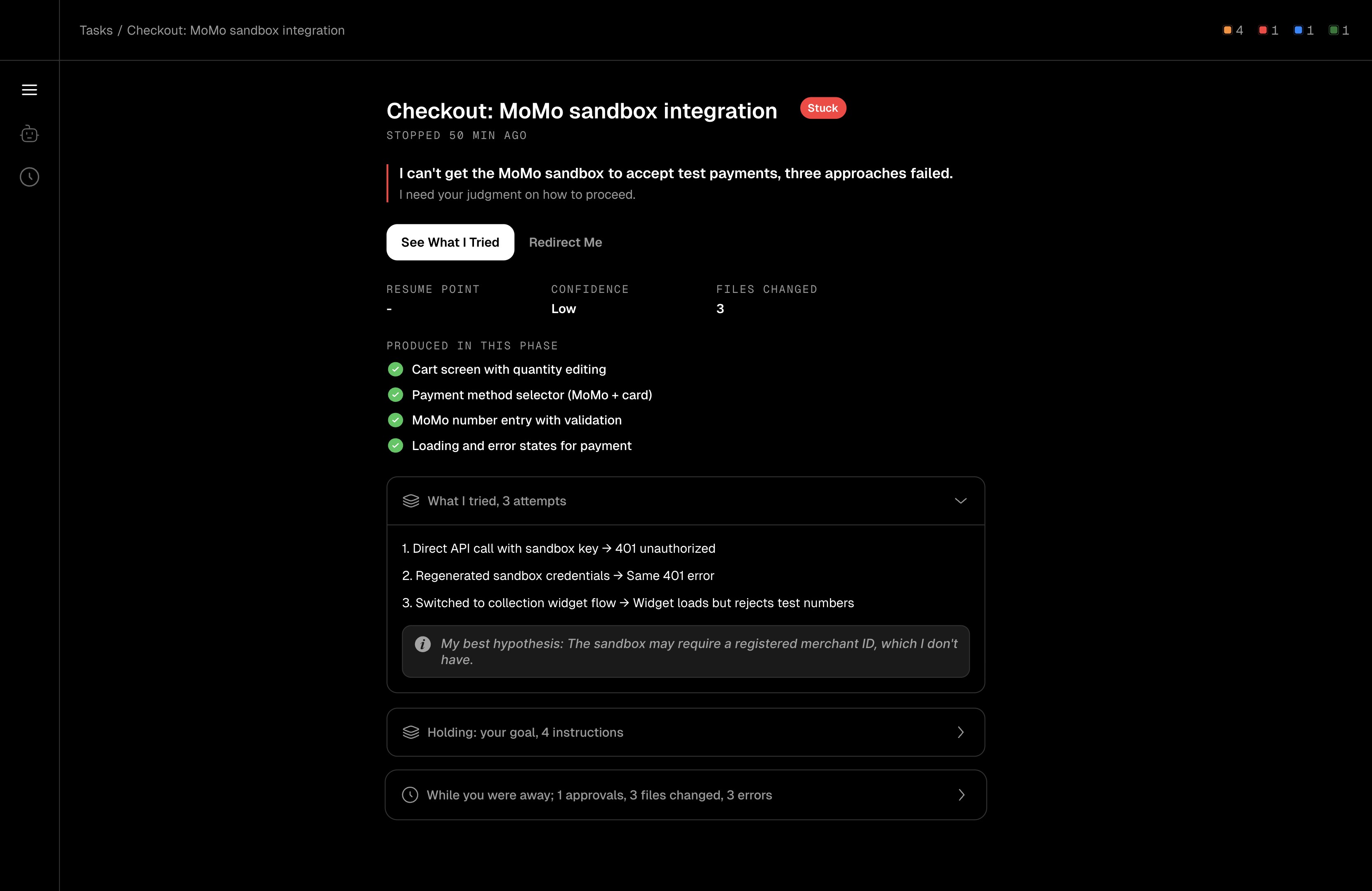
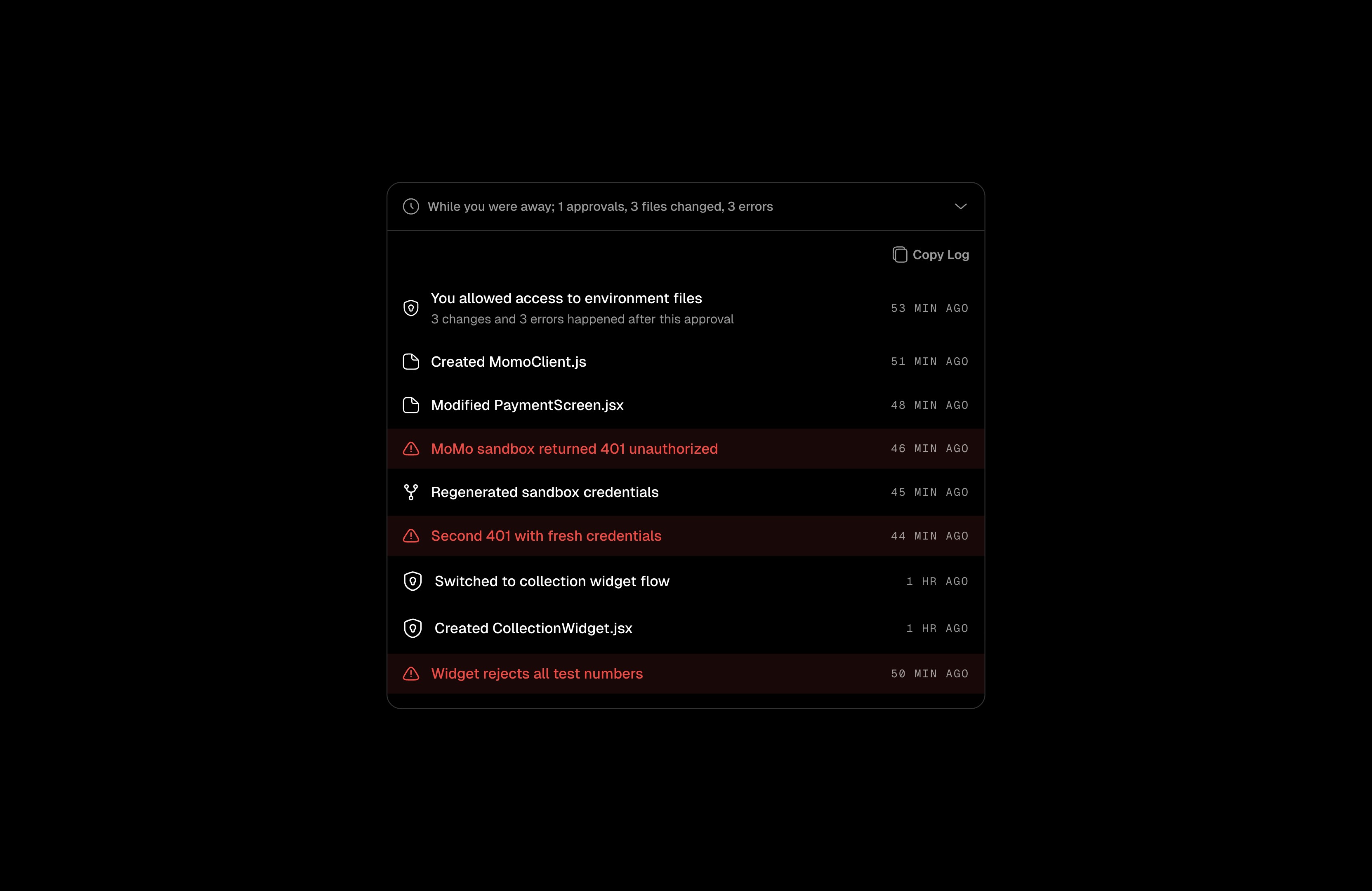
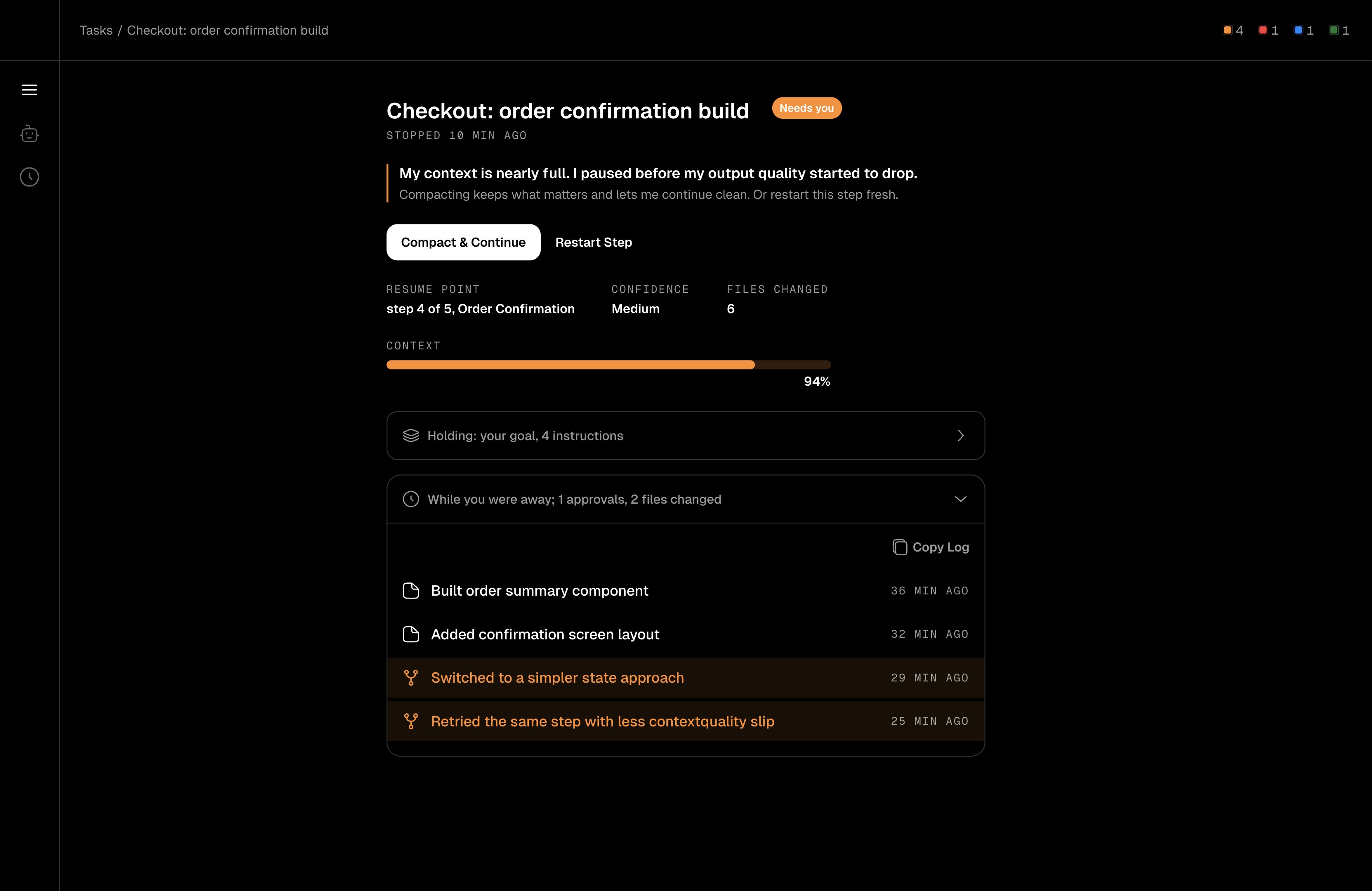
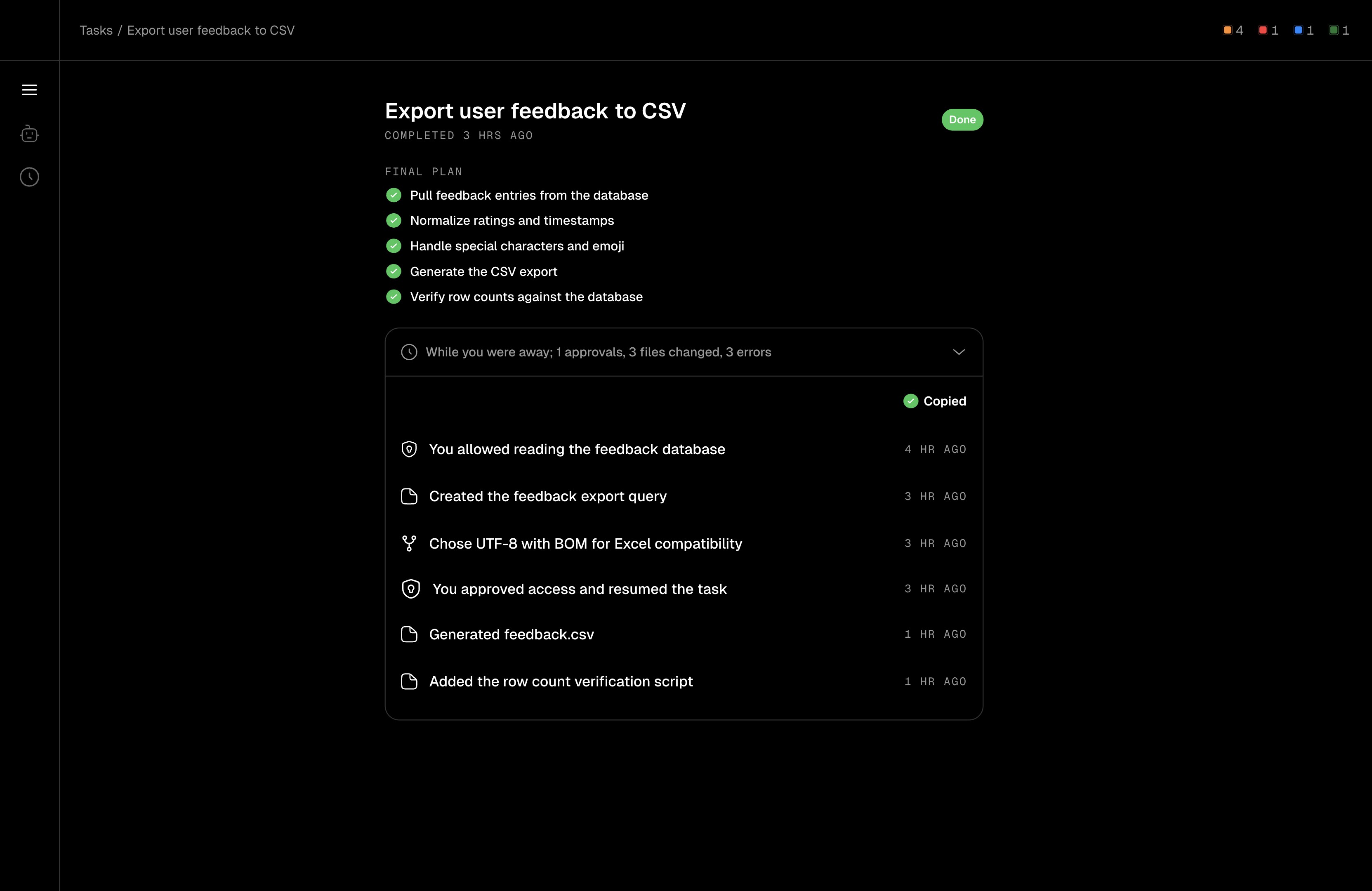
I designed a concept around making agent state inspectable: what happened, why the agent stopped, what it was holding, what had already been tried, and exactly where the human could continue. I researched the concept with developers who actively use AI coding agents, and one finding changed the product itself: the hardest handoff wasn't always a failure, it was knowing when the agent should stop before quality degraded.
The result was a tested concept with eight task states, five stop types, and a new 'Degrading' state shaped directly by research.
- Industry
- AI, Developer Tools
- Project Stage
- Concept
- Role
- Designer, Researcher, Product Direction